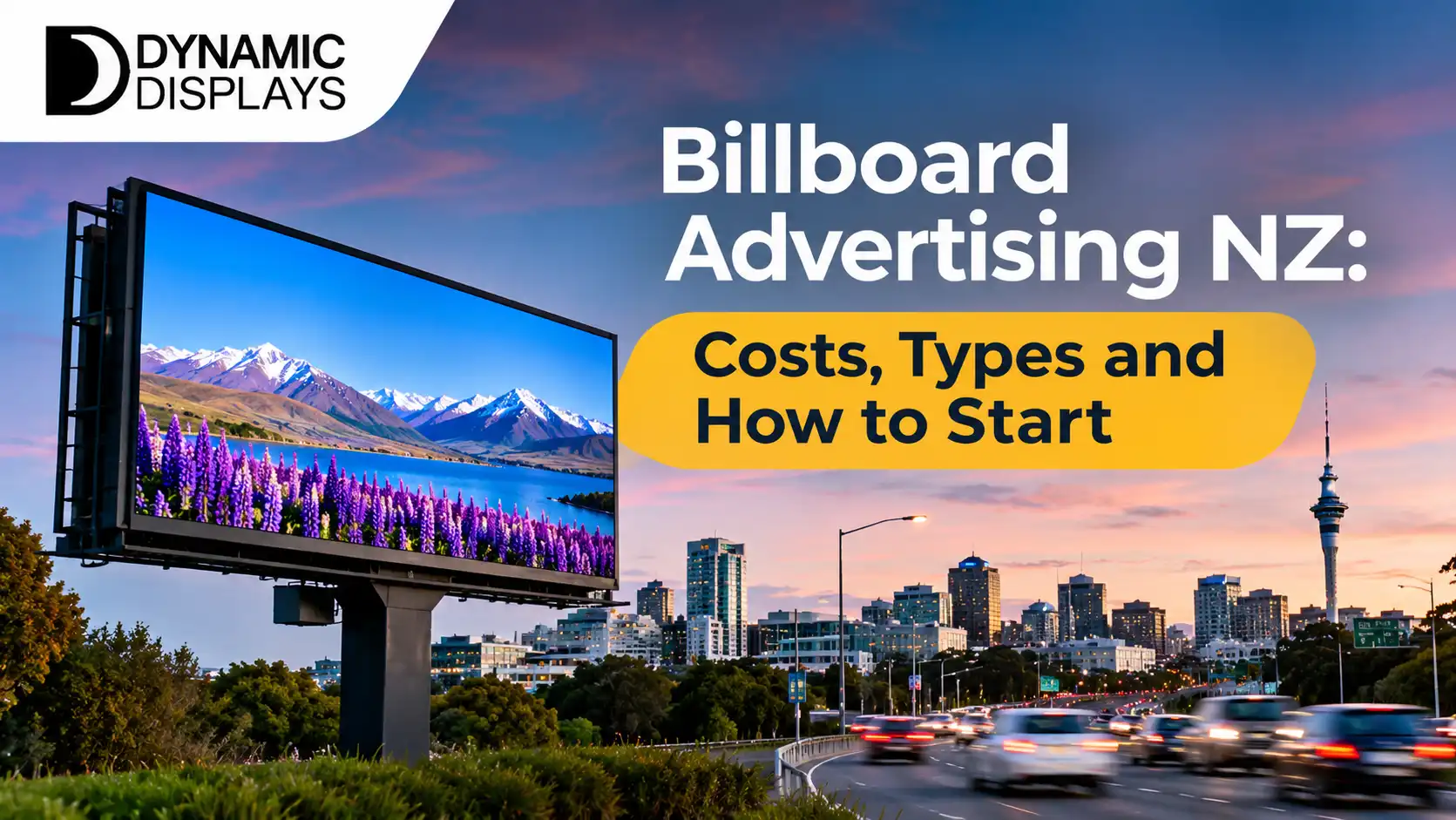
A practical guide to billboard advertising in NZ: the main billboard types, what drives the cost and how to plan and measure a first campaign.
Billboard advertising in NZ ranges from a single roadside panel to a network of digital screens. The cost depends on location, format and how long your message runs, so there is no single price. This guide explains the main billboard types, what drives the cost and how a business can start with a clear plan.
What Billboard Advertising Is
Billboard advertising puts your message on large outdoor displays that many people see every day. Traditional billboards use printed sheets, while digital billboards use screens that can show several messages in turn. Our billboards NZ page covers the range.
Main Types of Billboards
Static billboards show one printed message for the full booking. They are simple and suit long-running brand messages.
Digital billboards use LED screens and rotate several advertisers or messages. They suit offers that change often. See digital billboards.
Mobile and portable billboards are screens on trailers or vehicles that can be moved to events or high-traffic areas.
Building and wall displays put large screens or signs on a business's own premises.
What Affects the Cost
Billboard pricing varies widely, and the main factors are:
- Location and traffic: busy roads cost more than quiet ones.
- Size and format: larger sites and digital screens cost more.
- Booking length and share of time on a digital screen.
- Production: design, printing or content creation.
- Installation and any consent for your own screen.
Ask each provider for a written quote that lists these items so you can compare them.
Rent or Own
Renting space on someone else's billboard suits a short campaign or a test. Owning a screen at your premises suits a business that wants a long-term channel and full control over content. Owning means you pay for hardware and upkeep but not for each booking.
Planning a First Campaign
- Set one goal, such as awareness, foot traffic or an event.
- Pick a location your customers pass at the right time of day.
- Keep the message to a few words and one call to action.
- Use large type and strong contrast so it reads at speed.
- Plan how you will measure results.
Designing for Drivers
People see a billboard for a few seconds. Aim for around seven words or fewer, one image and a clear next step such as a website or a short phrase. Avoid small text, long phone numbers and busy backgrounds.
Measuring Results
Billboards are hard to track directly, so use indirect measures. A unique web address or offer code helps, as does a spike in searches for your name. Compare enquiries before and after the campaign, and keep other factors steady where you can.
Owning Your Own Screen
A screen at your premises, such as an LED display on a building front, gives you a billboard you control. Our LED screens and video walls and digital advertising screens are options for this approach. Large outdoor signs may need council consent, so check early.
Final Thoughts
Start with one goal and one location, keep the message short and measure what changes. Whether you rent or own, ask for itemised quotes and compare them like for like.
To plan your billboard or screen, contact Dynamic Displays and we will advise on formats and placement. You can also browse our signage solutions.
Read more: Electronic vs Digital Signage: What Is the Difference?
Read more: Digital Signage Auckland: Costs, Types and Top Uses