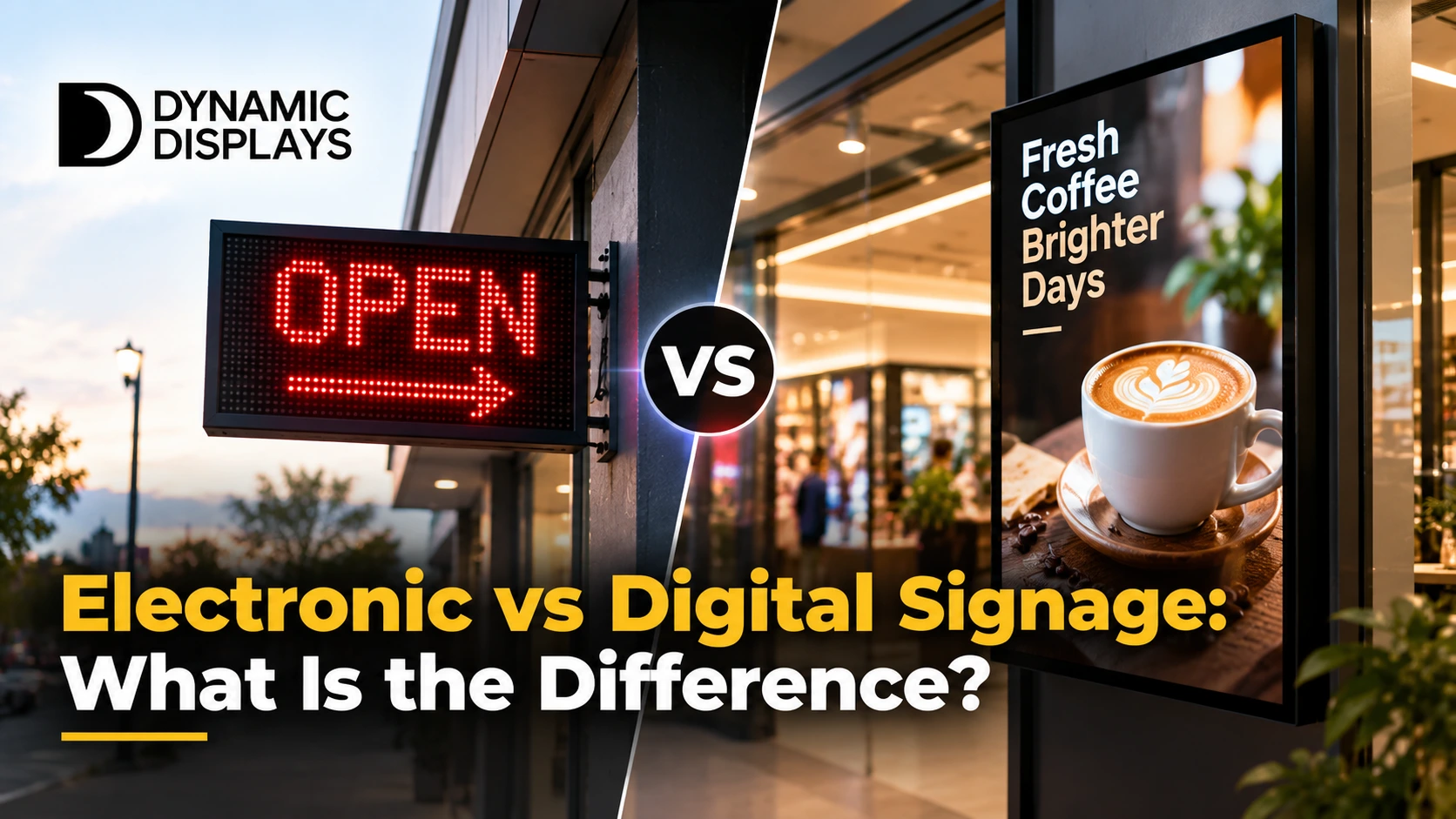

Electronic signage and digital signage are often used as the same thing, but they are not. Here is how they differ, where each works best and how to choose.
Electronic signage and digital signage are often treated as the same thing, and in everyday talk that is fine. When you are buying, though, the two terms point to different kinds of products, and mixing them up leads to quotes that do not match what you need. This guide explains the difference in plain terms so you can ask suppliers for the right thing.
The short version: electronic signage is any sign that uses electrical components to show a message, while digital signage is a screen-based system that displays changeable content from software. Every digital sign is electronic, but not every electronic sign is digital.
What Electronic Signage Means
Electronic signage is the broad group. It covers any sign powered by electricity to display a message, from a simple lit "Open" sign to a scrolling text board. Many electronic signs show text, numbers or simple symbols in a fixed format, such as a price board at a fuel station or a scrolling message board in a shop window.
Typical examples include:
- Scrolling LED message boards for text.
- Lit boxes and neon-style signs.
- Number displays for prices, queue tickets or temperature.
- Electronic sign boards on poles or building fronts.
These signs are usually simple to run. You type or program a message, and the sign repeats it. Our programmable LED signs page covers this type in more detail.
What Digital Signage Means
Digital signage uses screens, such as LCD displays or LED video walls, to show images, video, animation and live content. A media player sends content to the screen, and software controls what appears and when. That means one screen can show a menu in the morning, a promotion at lunch and a welcome message after hours.
Digital signage can include digital display screens, digital menu boards, digital billboards and larger LED signage installs. It suits businesses that change content often or want full-colour visuals.
Electronic vs Digital Signage at a Glance
|
Feature |
Electronic signage |
Digital signage |
|
What it shows |
Text, numbers, simple symbols |
Images, video, animation, live feeds |
|
Content changes |
Manual or simple programming |
Scheduled and managed in software |
|
Setup |
Usually simple |
Needs a screen, player and content plan |
|
Best for |
Short messages and prices |
Marketing, menus, information and branding |
|
Flexibility |
Limited |
High |
|
Typical setting |
Shopfronts, roadside, pricing |
Retail, hospitality, offices, public venues |
Where Electronic Signs Work Best
Electronic signs make sense when the message is short and rarely needs visuals. A trade shop that wants to show opening hours and a daily special, a car yard showing a rotating message, or a council noticeboard showing a number all fit this use.
They are also a good choice when budget is tight and the message is simple. Fewer parts means fewer things to maintain, and staff can usually update them without training.
Where Digital Signage Works Best
Digital signage works when you want to show more than words. Restaurants use it for menus, retailers for promotions, offices for lobby messages and wayfinding, and venues for event information. Because content is managed in software, you can update many screens at once without visiting each one.
If your signage needs to look like your brand, with photos, video and consistent design, digital signage is the stronger option. See our digital signage NZ page for the range of setups.
Indoor and Outdoor Considerations
Both types can be used indoors and outdoors, but outdoor use brings extra requirements. Screens in sunlight need high brightness, and all outdoor equipment needs weather protection and secure mounting. A sign that works well in a shop window may not cope with direct sun or rain on a street frontage.
Ask any supplier what brightness, ingress protection and operating temperature range the product is rated for. For outdoor projects, also check whether council consent is needed. Our outdoor digital signage page covers this in more depth.
Cost and Upkeep
Electronic signs generally cost less to buy and run because they have fewer components. Digital signage costs more up front but gives you more ways to use the screen, and the content can pay for itself if it supports sales or reduces staff time answering questions.
When comparing quotes, look at the full picture: hardware, installation, software subscriptions, content creation and support. A cheaper sign that cannot do what you need is not good value.
How to Choose
- Write down the message you need to show and how often it changes.
- Decide whether text and numbers are enough or you need images and video.
- Check where the sign will go: indoors, window or outdoors.
- Ask who will update the content and how.
- Compare the total cost over several years, not just the purchase price.
Final Thoughts
Electronic signage is the right fit for short, simple messages. Digital signage is the right fit for rich, changeable content that supports your brand. Many businesses use both: an electronic sign outside for hours and prices, and digital screens inside for menus and promotions.
If you are not sure which suits your site, contact Dynamic Displays and we will help you pick the right option. You can also browse our signage solutions.
Read more: Digital Signage Auckland: Costs, Types and Top Uses
Read more: Indoor vs Outdoor Digital Signage in Auckland: Which Is Better?