A clear guide to LED signage in Auckland: the main sign types, how brightness and pixel pitch work, and where each option suits best.
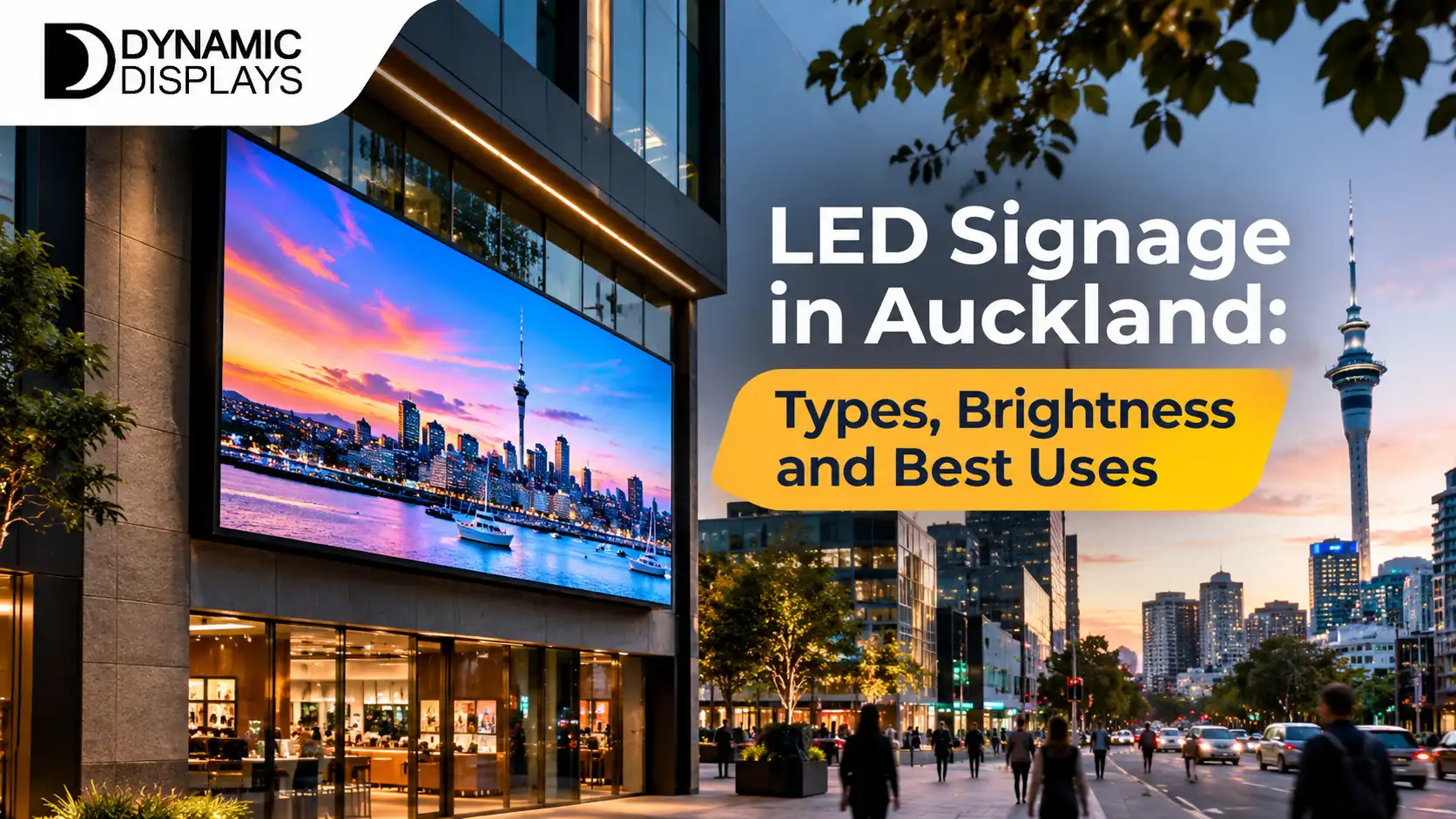
LED signage in Auckland covers a wide range of products, from a small programmable sign in a shop window to a large outdoor screen on a building. The right choice depends on where it will sit, how bright it needs to be and what you want it to show. This guide explains the main types, how brightness works and where each one fits best.
What LED Signage Means
LED signage uses light-emitting diodes to show text, images or video. The same technology is used in simple scrolling message boards and in large full-colour video screens. Our LED signage page gives an overview of the range.
Main Types of LED Signs
Programmable LED signs show text and simple graphics that you change from a controller or app. They suit opening hours, offers and short messages. See programmable LED signs.
Custom LED signs are made to a shape, colour or brand design, such as lit lettering or logos. They suit shopfronts and reception walls. See custom LED signs.
LED video screens and walls show full-colour video and images and can be built to almost any size. They suit retail, events, venues and building frontages. See LED screens and video walls.
Outdoor LED display screens are built for weather and direct sun. See outdoor LED display screens.
Understanding Brightness
Brightness is measured in nits. A screen in a shaded interior needs far fewer nits than one facing direct sun. Outdoor and window screens need high brightness so the picture is readable in daylight. Many outdoor screens also adjust brightness automatically using a light sensor, so they are not too bright at night.
Ask any supplier for the brightness rating of the exact screen and where it will be used. Do not assume a high number is always better, because a screen that is too bright at night can annoy neighbours and may breach local conditions.
Pixel Pitch and Viewing Distance
Pixel pitch is the distance between LED points on a screen. A smaller pitch gives a sharper picture at close range, and a larger pitch is fine for viewers far away. A screen viewed from a few metres needs a finer pitch than a billboard viewed from the road.
Indoor or Outdoor
Indoor LED screens can be thinner and need less weather protection, so they cost less to run and to mount. Outdoor screens need sealed cabinets, secure mounting and often ventilation. Check the ingress protection rating, and ask about operating temperature range.
Best Uses in Auckland
- Shopfronts and windows: short offers and opening hours.
- Hospitality: menus, specials and event nights.
- Building signage: branding and directories. See building signage in Auckland.
- Venues and events: schedules, sponsors and live content.
- Corporate lobbies: brand video and visitor information.
Council Consent and Safety
Large or illuminated outdoor signs may need consent from Auckland Council, and rules vary by zone and by sign size and position. Ask your supplier whether they have handled similar applications, and check requirements before you order.
Costs to Plan For
The price depends on the size, pixel pitch, indoor or outdoor rating, mounting, power, controller and any consent work. Ask for an itemised quote so you can compare options fairly.
How to Choose
- Decide whether you need text only or full-colour video.
- Check where the sign will sit and how far away people will view it.
- Choose brightness and pixel pitch to suit that location.
- Confirm weather rating and consent needs for outdoor signs.
- Ask about warranty, support and how content will be updated.
Final Thoughts
LED signage is flexible, but the right product depends on the job. Match the type, brightness and pitch to the location and the message, and check consent early for outdoor signs.
To discuss a sign for your site, contact Dynamic Displays and we will help you choose the right option. You can also see our signage solutions.
Read more: Electronic vs Digital Signage: What Is the Difference?
Read more: Digital Signage Auckland: Costs, Types and Top Uses