What to check before buying outdoor digital signage in NZ: brightness, weather ratings, temperature, mounting, consent and a simple buyer checklist.
Outdoor digital signage in NZ has to cope with sun, rain, wind and salt air while staying readable. A screen that looks great in a showroom can wash out in daylight or fail after a wet winter. This guide covers brightness, weather protection and the other points to check before you buy an outdoor screen.
What Makes Outdoor Signage Different
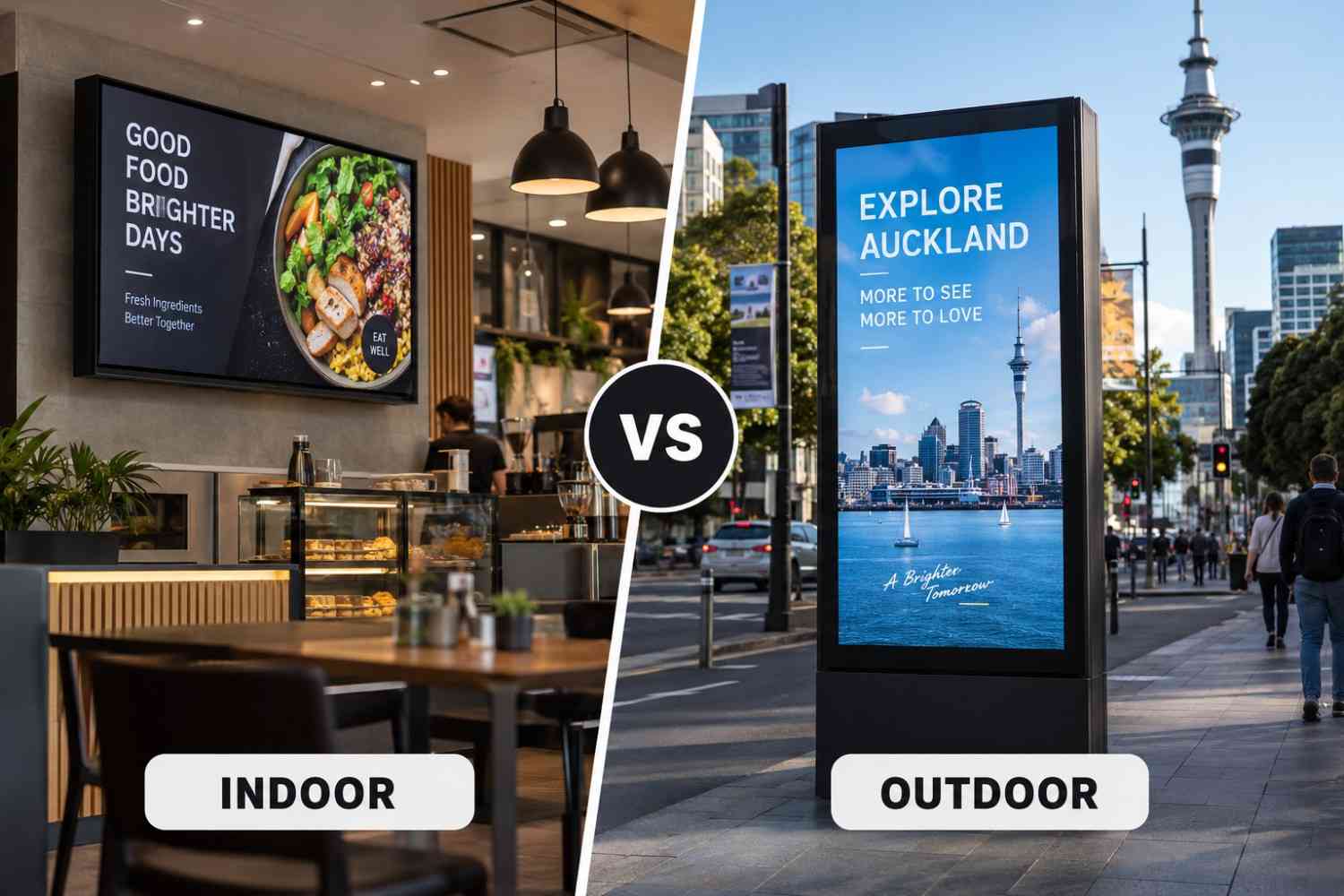
Outdoor screens are built differently from indoor ones. They use brighter panels, sealed housings, temperature control and tougher mounts. Our outdoor digital signage page describes the main options, and outdoor LED screen displays cover larger formats.
Brightness
Brightness is measured in nits. Direct sun needs a much higher rating than shade or an indoor window. Screens that face the sun need the highest figures, while a screen under an awning needs less.
Automatic brightness control matters too. A light sensor lowers brightness at night so the screen is comfortable to look at and uses less power.
Weather Protection
Look at the ingress protection (IP) rating, which shows how well the screen resists dust and water. The higher the second number, the better it handles water. In coastal areas, ask about corrosion resistance for salt air.
Wind load matters for mounts and poles, especially in exposed sites. Ask your supplier how the structure is rated and who checks it.
Temperature and Condensation
Screens produce heat, and direct sun adds more. Outdoor units use fans, heat-exchangers or air conditioning to stay within operating range. In cold areas, check that the screen starts and runs in low temperatures, and ask how the cabinet manages condensation.
Glass, Glare and Viewing Angle
Anti-glare glass improves readability in sun. Viewing angle matters if people approach from the side. Think about which direction the screen faces, because low sun at dawn or dusk can still wash out a display.
Power, Network and Content
Outdoor installs need safe power and a reliable connection. Options include wired network, mobile data or local playback with scheduled updates. Make sure the screen keeps playing if the connection drops.
Council Consent
Large or illuminated outdoor signs may need consent depending on the zone, size and position. Ask your supplier if they have handled similar applications, and check early. Rules vary by council.
Security and Safety
Choose tamper-resistant mounts and lockable cabinets in public places. Good cable routing and earthing matter for safety. Use qualified installers for power and mounting.
Choosing the Right Outdoor Sign
- Shopfront or window: high-brightness display facing the street.
- Roadside: weatherproof LED screen with wide viewing angles. See outdoor LED display screens.
- Building signage: custom signs and screens on facades. See outdoor signs.
- Events and short-term: portable screens for hire.
Checklist Before You Buy
- What brightness rating does it have, and for what exposure?
- What are the IP rating and operating temperature range?
- Is it suitable for coastal or exposed sites?
- How does power and connectivity work?
- Is consent needed, and who handles it?
- What warranty and local support are included?
Final Thoughts
Outdoor digital signage works when the brightness, weather rating and mounting suit the site. Ask for specific ratings, not general claims, and plan consent early.
To discuss an outdoor screen for your site, contact Dynamic Displays and we will help you choose. You can also explore our signage solutions.
Read more: What Are the Best Types of Display Screens for Outdoor Digital Signage in New Zealand
Read more: LED Signage in Auckland: Types, Brightness and Best Uses