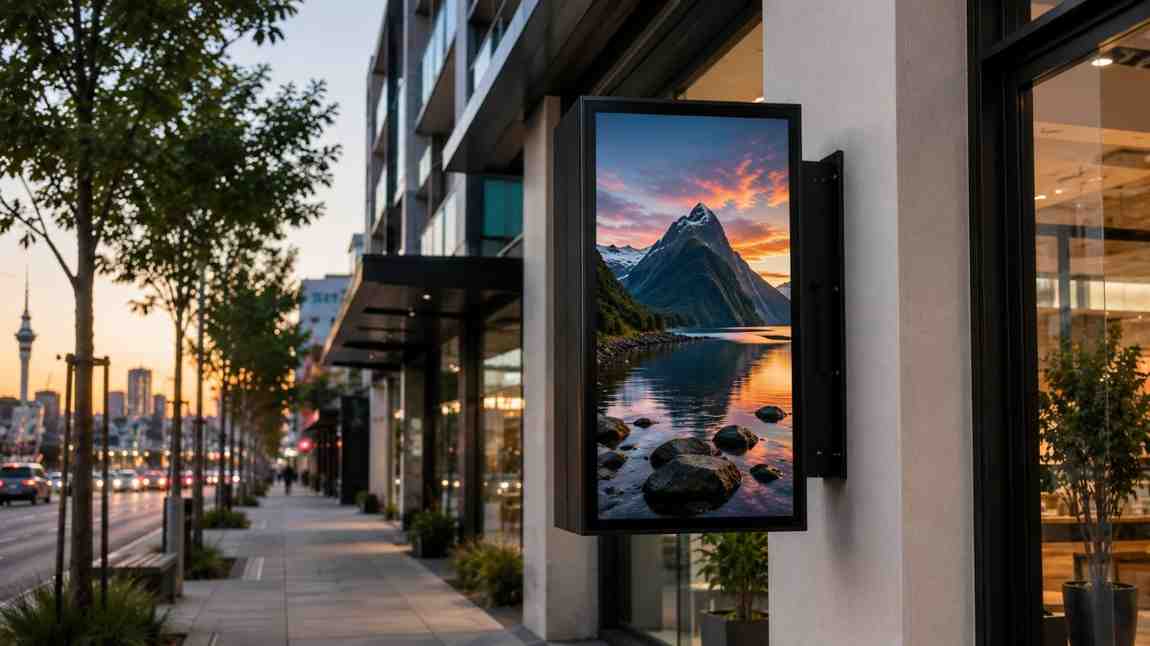
This guide covers everything you actually need to know about outdoor signage in NZ. Not the fluffy theory. The practical stuff that helps you get noticed, stay visible, and make a real impression on the people who matter most: customers nearby and ready to act.
Why Outdoor Signage NZ Businesses Use Has Changed Dramatically
Five years ago, a printed banner or a static lightbox was considered perfectly adequate for most businesses. That is no longer the case. The bar has moved, and customers notice.
Digital outdoor signage has become far more accessible, and businesses across New Zealand are adopting it faster than most people realise. According to a FedEx Office survey, 68% of consumers believe a business's signage reflects the quality of its products or services. That is a significant number. Your sign is not just a marker. It is a quality signal.
I have noticed that in areas where multiple competing businesses operate side by side, the ones with dynamic digital displays consistently draw more attention, even when their products or services are similar. Visibility creates a perception of credibility before anyone spends a dollar.
The New Zealand Outdoor Environment: Why It Demands Better Signage
Here is something that often gets overlooked. New Zealand's outdoor conditions are genuinely tough on signage. You are dealing with UV exposure that fades materials quickly, coastal salt air in many regions, strong winds, heavy rainfall, and temperature swings that can push hardware to its limits.
A screen or display that performs brilliantly in a controlled indoor environment can fail spectacularly outside if it is not built for the job.
When I tried standard consumer-grade screens in an outdoor-facing window installation for a small retail client, the brightness was completely inadequate by mid-morning once the sun hit the glass. The screens looked washed out and unprofessional. Switching to purpose-built outdoor displays with appropriate nit ratings solved the problem completely.
New Zealand businesses need to factor local conditions into every outdoor signage decision. This is not a place where you can cut corners on hardware and hope for the best.
Types of Outdoor Signage Available in NZ
Understanding your options helps you make smarter choices. Here is a clear breakdown of what is available and where each type fits best.
Static Outdoor Signage
Static signs are fixed, non-digital displays. These include illuminated lightboxes, painted or printed facade signs, and monument signs. They are straightforward, relatively low maintenance, and work well for permanent brand identification.
The limitation is obvious. Once they are up, the message is locked in. Any change requires reprinting or rebuilding the sign entirely. For businesses that run frequent promotions or need to update messaging regularly, static is a costly constraint.
Digital LED Outdoor Displays
LED outdoor displays are the most visible and impactful option available. They produce bright, high-contrast images visible in direct sunlight and can cycle through multiple messages, images, or videos automatically.
They are ideal for high-traffic locations where you want to run multiple promotions or communicate different messages throughout the day. A gym can advertise a morning class at 6am and a personal training offer by lunchtime, all from the same screen.
Portable Outdoor Digital Signage
This category has grown enormously in popularity among New Zealand businesses, particularly in events, hospitality, and retail. Portable outdoor displays can be moved, repositioned, and used across multiple locations as needed.
Dynamic Displays carries a well-regarded range of portable outdoor screens, including a 43-inch smart outdoor portable display that has become a go-to option for event companies and retailers wanting flexibility without a permanent installation commitment.
Window-Facing High Brightness Displays
These are technically indoor-mounted screens, but they face outward through a window to capture attention from passersby. High brightness ratings of 2500 nits and above are essential here to cut through daylight glare and remain visible from the street.
What to Look for When Choosing Outdoor Signage in NZ
Not every screen marketed as outdoor-grade actually delivers. Here is a practical checklist based on what genuinely matters for New Zealand conditions:
- IP65 or higher weather protection rating to handle rain and humidity
- Minimum 2500 nits brightness for daytime visibility (3500+ for direct sun locations)
- Tempered front glass to resist impact and environmental stress
- Corrosion-resistant casing especially for coastal or high-humidity environments
- Built-in thermal management to prevent overheating in summer
- Remote content management capability so you can update displays without being on-site
- Local support and warranty from a provider based in New Zealand
That last point matters more than people realise. Having a local team who can respond quickly when something goes wrong is far more valuable than saving a small amount upfront on hardware from an overseas supplier with no local presence.
How Outdoor Signage NZ Businesses Use Drives Real Results
Let me give you a real picture of what effective outdoor signage actually does for a business.
A Wellington-based cafe in a busy commercial strip had foot traffic that was inconsistent. Lunch was strong but mornings were quiet. After installing a high-brightness outdoor display showing rotating morning specials and coffee promotions visible from the street, their morning foot traffic shifted noticeably within the first month.
The sign was doing what a good sign always does: speaking directly to people at the exact moment they were walking past and making a decision about where to go.
In my experience, the businesses that see the fastest return from outdoor signage are those that treat it as an active communication tool rather than a set-and-forget installation. Updating content regularly, running time-sensitive offers, and aligning messaging with what is actually happening inside the business makes an enormous difference.
Industry-Specific Outdoor Signage Applications
Retail Businesses
Retail outdoor signage needs to do two things well: attract attention and communicate a compelling reason to come inside. Rotating promotional displays showing current offers, new arrivals, or season-specific messaging consistently outperform static promotional signs.
Hospitality and Food Service
Restaurants, cafes, and bars benefit enormously from food-forward outdoor displays. High-resolution images of dishes, drinks, or daily specials shown on a screen outside can pull in customers who had no prior intention of stopping. The impulse factor in hospitality is real, and good outdoor signage leverages it directly.
Corporate and Commercial Buildings
For office buildings and business parks, outdoor signage serves a different purpose. It signals professionalism and presence. A well-designed, well-lit exterior display communicates that this is a serious organisation. It also assists with wayfinding for clients and visitors navigating larger commercial properties.
Events and Exhibitions
Portable outdoor signage is standard equipment at exhibitions, trade fairs, markets, and outdoor events across NZ. The ability to set up quickly, reposition as needed, and display bold, readable content at eye level gives exhibitors a significant visibility advantage over printed banner alternatives.
Dynamic Displays has supplied portable outdoor display solutions to event companies across New Zealand, and the consistent feedback is that digital displays generate more engagement at exhibition stands than traditional printed materials.
Common Outdoor Signage Mistakes NZ Businesses Make
These errors come up repeatedly, and they are all avoidable with a bit of forethought.
Using indoor screens outside. Consumer TVs are not designed for outdoor use. Brightness, sealing, and thermal management are all inadequate. They fail quickly and look terrible in sunlight.
Overcrowding the message. Passersby have roughly two seconds to absorb your sign. One clear message beats five competing ones every time.
Ignoring placement. A sign blocked by a parked vehicle, a tree, or another structure is money wasted. Do a proper site walk-around at different times of day before finalising placement.
Buying on price alone. Cheap outdoor hardware gets replaced quickly. Quality displays cost more upfront and far less over their full lifespan.
Not updating content. Digital signage that shows the same message for six months defeats the purpose. Build a simple content rotation schedule and stick to it.
Choosing the Right Outdoor Signage Partner in NZ
The hardware is only part of the picture. Who installs it, supports it, and helps you get the most from it matters just as much.
When evaluating any signage provider in New Zealand, ask these questions directly:
- Do they conduct a site assessment before recommending a solution?
- What is the full warranty on hardware and installation?
- Is content management handled through their platform or an independent system?
- What does ongoing support look like after installation?
- Do they have a physical presence in New Zealand with local technicians?
Dynamic Displays checks all of those boxes. With over a decade of experience and more than 200 projects delivered across the country, they bring a level of local knowledge and reliability that matters when you are making a long-term infrastructure decision. Their team handles everything from initial consultation through to installation and ongoing support.
Getting More from Your Outdoor Signage Long-Term
Installing your display is the beginning, not the end. Here is what separates businesses that get consistent value from their outdoor signage from those who see diminishing returns:
Refresh your content at least monthly. Rotate promotions, highlight seasonal offers, and keep messaging aligned with what is happening in your business right now.
Use your display to create urgency. Time-limited offers and event-specific promotions perform strongly on outdoor displays because they give people a reason to act now rather than later.
Monitor and adjust. If a particular promotion drives a noticeable increase in enquiries or visits, do more of it. If something falls flat, change it. Your outdoor display is a testable marketing channel, not a static asset.
Maintain the hardware. Clean the screen regularly, check connections, and keep software updated. A well-maintained display lasts significantly longer and performs far better than one that is neglected.
Outdoor signage NZ businesses invest in properly is one of the highest-visibility, highest-return physical marketing tools available. It works around the clock, speaks to people at the exact moment they are nearby, and builds brand credibility with every impression.
If you are ready to upgrade your outdoor presence, explore the full range of outdoor display solutions from Dynamic Displays and find the right fit for your location and goals.
Related Pages and Next Steps
Compare related options before you decide: outdoor digital signage, outdoor LED display screens, outdoor signs and Best Types of Display Screens for Outdoor Digital Signage in New Zealand.
Not sure which option suits your site? Contact Dynamic Displays for advice and a quote.